WHAT HUMAN FOODS CAN DOGS EAT?
It's incredibly hard to resist those adorable little eyes watching us while they beg for a bite of whatever we're eating. We know how difficult it is to say no to our four-legged friends!
That's why we've gathered here, in a simple and practical way, some of the foods you can and can't offer your dog, to help keep them healthy and happy for many years by your side.
It's very important to understand the impact a healthy diet can have on our pups' health and life expectancy. Equally, we must recognise that some foods that are perfectly safe for us can be harmful or even toxic to them. As their owners and guardians, it is our responsibility to know the difference and make sure we only offer what is safe.
1. FRUITS: WHICH ONES CAN AND CAN'T DOGS EAT?
When we think of fruit, it's natural to associate it with a healthy diet. After all, if it's good for us, why wouldn't it be good for our puppies too?
In fact, not all fruits are safe for dogs! Some can be harmful and even pose a serious risk to their health. That's why it's very important to know which ones to avoid and to take a few precautions before offering any kind of fruit.
To help you, we've put together a list of fruits you should avoid giving your pup!
WHAT NOT TO GIVE OUR DOG
It is very important not to offer your dog the following foods, even if they beg for them or seem to love them, as they can be harmful to their health.
AVOCADO 🥑
Although it is a food that still generates some controversy, since it hasn't been fully proven to be harmful in every situation, the safest option is to avoid offering it to your dog. After all, there are plenty of other fruits you can share with them without taking unnecessary risks. Your pup's health and well-being should always come first!
CHERRIES 🍒
Cherries may look like a harmless fruit, but they require some care when it comes to our pups. The pits, stems and leaves contain compounds that can release cyanide, a substance that is toxic to dogs. In addition, the pits are a choking hazard and can cause intestinal blockages. So the safest option is to avoid offering cherries to your dog. After all, there are other equally tasty fruits that are much more suitable for them!
APRICOTS 🍑
Apricots are another fruit that deserves special attention. Although the flesh, without the pit, doesn't pose the same risk, the pits, leaves and stems contain compounds that can release cyanide. This substance can cause poisoning and breathing problems. As a precaution, we recommend keeping these parts of the fruit well away from your pup and choosing safer alternatives.
GRAPEFRUIT 🍊
Grapefruit is a fruit we should avoid offering to our dogs. Although the flesh may be eaten without necessarily being toxic, the fruit, the peel and other parts of the plant contain essential oils and compounds that can cause gastrointestinal irritation. The most common symptoms are vomiting and diarrhoea. To avoid discomfort and unnecessary risks, it's best not to include this fruit in your dog's diet.
PEACHES 🍑
Peaches are a case that requires some attention. Although the flesh, when ripe and pit-free, can be offered in small amounts, the pit, leaves and stems contain compounds that can release cyanide. Besides the risk of poisoning, the pit can cause choking or intestinal blockages. So, if you'd like to share a small piece of fruit with your pup, there are simpler and safer options!
PLUMS 🫐
Plums should also be kept away from our pups, mainly because of their pits, leaves and stems. These parts contain compounds that can release cyanide and, in the case of the pits, there is also a risk of choking and intestinal obstruction. Although the flesh doesn't present the same danger, we recommend avoiding offering this fruit to your dog. Better safe than sorry!
GRAPES AND RAISINS 🍇
Although they are very common in our homes and seem like a harmless little treat, grapes and raisins pose a serious danger to dogs. Even in small amounts, they can cause severe kidney damage and lead to acute kidney failure. The most worrying part is that there is still no amount considered safe, since sensitivity varies from dog to dog.
If you suspect your dog has eaten any of these fruits and shows any symptoms, even if they only consumed a small amount, contact your vet immediately. Don't wait for the symptoms to go away on their own! Quick intervention can make all the difference.
WHAT WE CAN GIVE OUR DOG
Here is a list of fruits we can safely offer our dog. Besides being tasty, some can bring nutritional benefits and help enrich their diet, as long as they are offered in appropriate amounts and as a complement to a balanced diet:
APPLE 🍎
Apple should be offered without seeds or core, cut into small pieces. Being a fibre-rich fruit, it will help your dog have nice, healthy poops! It also contains vitamins A and C, which can contribute to good digestion and your pup's overall health. To top it off, it's a fresh, low-calorie snack, perfect even for dogs that are watching their weight!
BLUEBERRIES 🫐
Blueberries should be offered well washed and in small quantities, for example a handful, depending on your dog's size. They are rich in antioxidants, especially anthocyanins, which help protect cells against oxidative damage. They also contain fibre and vitamin C.
BANANAS 🍌
Bananas should be offered in small slices or pieces, always with the peel removed, since the peel brings no benefit to your dog and can be hard to digest.
They are an excellent source of potassium, vitamin B6 and fibre, nutrients that support muscle, nerve and digestive function. However, they should be offered in moderation, as they contain a considerable amount of natural sugar that, in excess, can be bad for your pup. After all, even the tastiest treats should have limits!
STRAWBERRIES 🍓
Strawberries, once properly cleaned and with the leaves removed, can be offered whole or cut into small pieces, depending on your dog's size. They are rich in vitamin C, fibre and antioxidants, which contribute to overall health. They also have a high water content, helping to supplement your pup's hydration.
If your dog likes strawberries, you can even try adding them to a bowl of water to give them an extra incentive to drink more, especially if you notice they have trouble staying well hydrated. After all, there are little tricks that can make all the difference!
WATERMELON 🍉
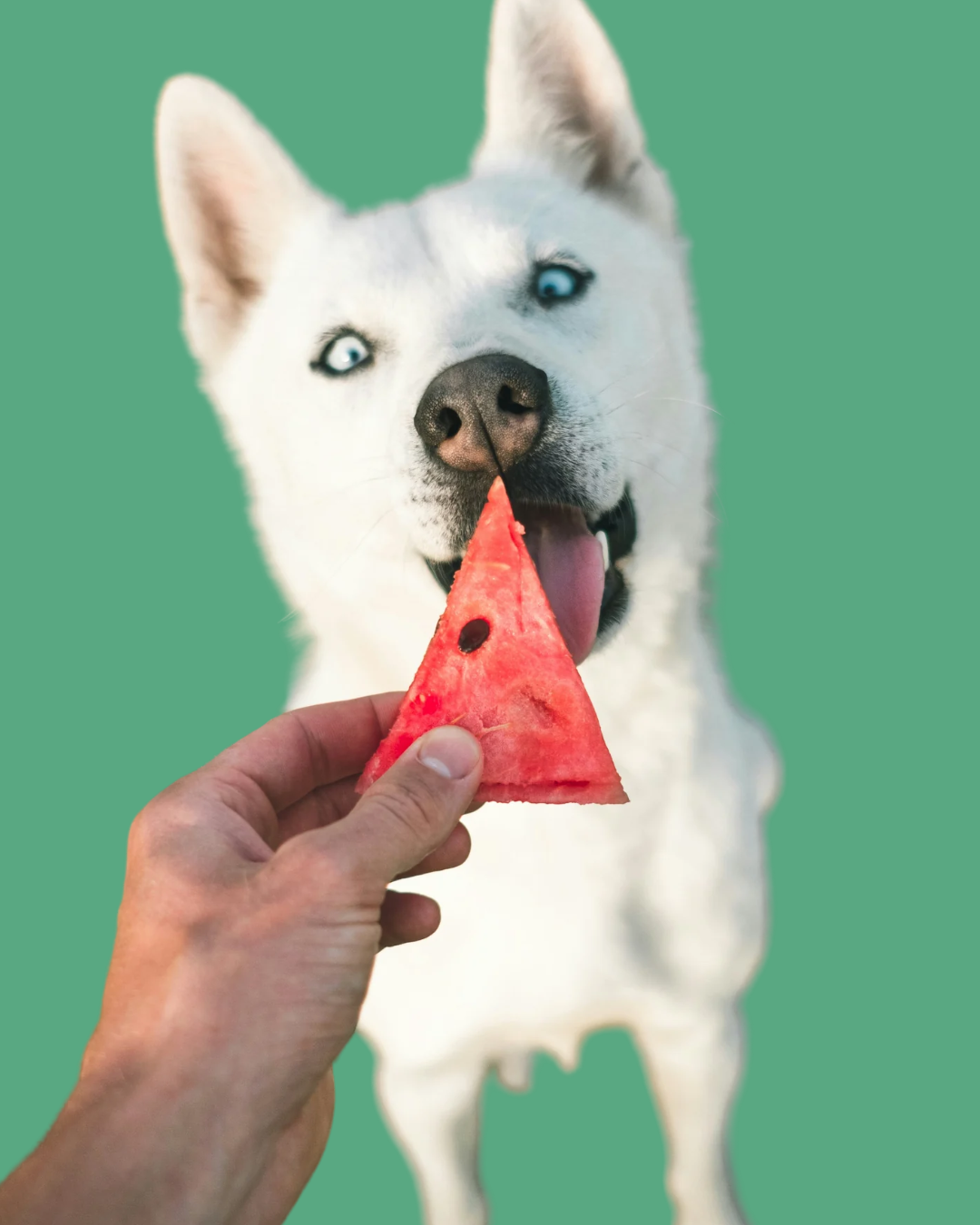
Watermelon is rich in water and a very refreshing, healthy option, especially on hot summer days, helping your dog stay hydrated. It also contains vitamins A, B6 and C, as well as antioxidants such as lycopene, which contribute to your pup's overall health.
To offer it, always remove the rind and all the seeds, cutting the flesh into small pieces according to your dog's size. That way you'll have a fresh, tasty snack that's perfect for hot days!
2. VEGETABLES: WHICH ONES CAN AND CAN'T DOGS EAT?
When it comes to vegetables, there are plenty of healthy options we can offer our dog! However, we must always keep our pup's size in mind and not overdo the quantities, as none of these foods should be eaten in excess. It's also important to remember that offering meat and vegetables does not replace everyday dog food, as it contains the essential nutrients for a complete and balanced diet. These foods should only be a supplement to your dog's diet and should never replace their regular food!
WHAT WE CAN GIVE OUR DOG
CARROTS 🥕
Carrot is a very healthy and versatile vegetable that can be offered raw or cooked, always cut into small pieces according to your dog's size. It is rich in fibre and beta-carotene, which the body converts into vitamin A, an important nutrient for vision, skin and the immune system. It is also low in calories and very crunchy, making it a delicious, healthy snack for your pup!
CUCUMBER 🥒
Cucumber is an excellent option for hot days, as it contains a high amount of water, helping to supplement your dog's hydration. It is also low in calories, making it a great alternative for pups that love to snack but need to watch their weight! Before offering it, wash it well and cut it into small pieces to make chewing easier and avoid choking. Fresh and crunchy, it's a simple and very refreshing snack!
BROCCOLI 🥦
Broccoli can also be part of your dog's diet, as long as it is offered in small amounts and, preferably, cooked and without any seasoning. It is rich in fibre and contains vitamins C and K, nutrients that contribute to overall health. However, it's important not to overdo it, as excessive consumption can cause gas and some digestive discomfort. After all, even the healthiest vegetables should be offered in moderation!
PUMPKIN 🎃
Pumpkin is a very interesting vegetable to include occasionally in your dog's diet. It is rich in fibre and beta-carotene, which contributes to overall health, and can help maintain good digestive function. It should always be offered cooked, without skin, seeds or any kind of seasoning. With a soft texture and a naturally sweet flavour, it's a delicious option for your pup!
GREEN BEANS 🫛
Green beans are another vegetable you can offer your pup, raw or cooked, as long as they are well washed, unseasoned and cut into pieces suited to their size. They are low in calories and contain fibre, vitamins and minerals that help complement a balanced diet. They are also a great option for dogs that need lighter snacks without giving up something tasty!
ZUCCHINI (COURGETTE) 🥒
Zucchini is a light, low-calorie vegetable with a good amount of water, making it a great option to complement your dog's diet. It also contains fibre, vitamins and minerals that contribute to their well-being. It can be offered raw or cooked, as long as it is well washed, unseasoned and cut into small pieces. It's a simple and tasty way to add some variety to your pup's treats!
SWEET POTATO 🍠
Sweet potato is a nutritious option that can be offered to your dog, as long as it is always well cooked, peeled and without any seasoning. It is rich in fibre and beta-carotene, which the body converts into vitamin A, and also provides energy through its carbohydrates. However, it should be offered in small amounts, since it is still a carbohydrate-rich food. That way, your pup can enjoy this tasty treat without overdoing it!
WHAT WE SHOULD AVOID GIVING OUR DOG
ONION 🧅
Onion is one of the vegetables that should never be part of your dog's diet, whether raw, cooked or dehydrated. It contains substances that can damage red blood cells, leading to a condition called haemolytic anaemia. Eating it can also cause vomiting, diarrhoea, weakness and loss of appetite. So pay special attention to leftovers and some prepared foods, which may contain hidden onion!
GARLIC 🧄
Although widely used in our cooking, garlic is toxic to our pups and should be avoided completely. It contains compounds that can damage red blood cells and cause anaemia. The risk exists with fresh, cooked, powdered and dehydrated garlic alike. Even when used in small amounts to season our dishes, it should never be added to your dog's food!
LEEK 🥬
Leek belongs to the same family as onion and garlic and is also toxic to dogs. Eating it can cause changes in red blood cells, leading to anaemia, as well as digestive symptoms such as vomiting and diarrhoea. It's important to remember that cooking does not eliminate its toxicity. So keep this vegetable out of your pup's reach!
CHIVES LEEK SHALLOTS 🌱
Chives may seem harmless, especially since they are used in small amounts to flavour our dishes, but they also pose a danger to dogs. Like the other vegetables in the Allium family, they contain substances that can destroy red blood cells and lead to anaemia. Ingestion can cause vomiting, weakness, rapid breathing and even changes in urine colour. So it's best to avoid this ingredient completely!
SHALLOTS 🧅
Shallots are widely used in sauces and other dishes, but they are not safe for our pups. They belong to the onion family and contain compounds that can damage red blood cells, leading to anaemia. They can also cause gastrointestinal discomfort, vomiting and diarrhoea. Be careful, because even when cooked or mixed into other foods they still pose a risk!
RAW POTATO 🥔
Raw potato, especially when green or sprouting, can be dangerous for your pup. These parts can contain solanine, a toxic substance that can cause vomiting, diarrhoea, weakness and changes in the nervous system. Unlike properly cooked, unseasoned potato, the raw version should be avoided. So never let your dog gnaw on raw potatoes or the green parts of this vegetable!
WILD MUSHROOMS 🍄
Not all mushrooms are the same, and some wild mushrooms can be extremely toxic to dogs. Depending on the species, eating them can cause vomiting, diarrhoea, tremors, seizures, liver problems and even life-threatening situations. Since it isn't always easy to tell safe mushrooms from poisonous ones, it's best to never let your pup eat mushrooms they find on walks!
THANK YOU FOR READING! 🐾
We hope this list has helped you understand a little more about which vegetables your furry friend should avoid and how to keep them safe and healthy.
In our next post, we will be talking about other important aspects of your puppy's healthy diet, sharing more useful tips to help you make the best choices for your four-legged friend.
We hope you found this information helpful, and remember: a little knowledge can make a big difference in keeping your doggy happy and healthy!
Stay tuned for more! ❤️🐶