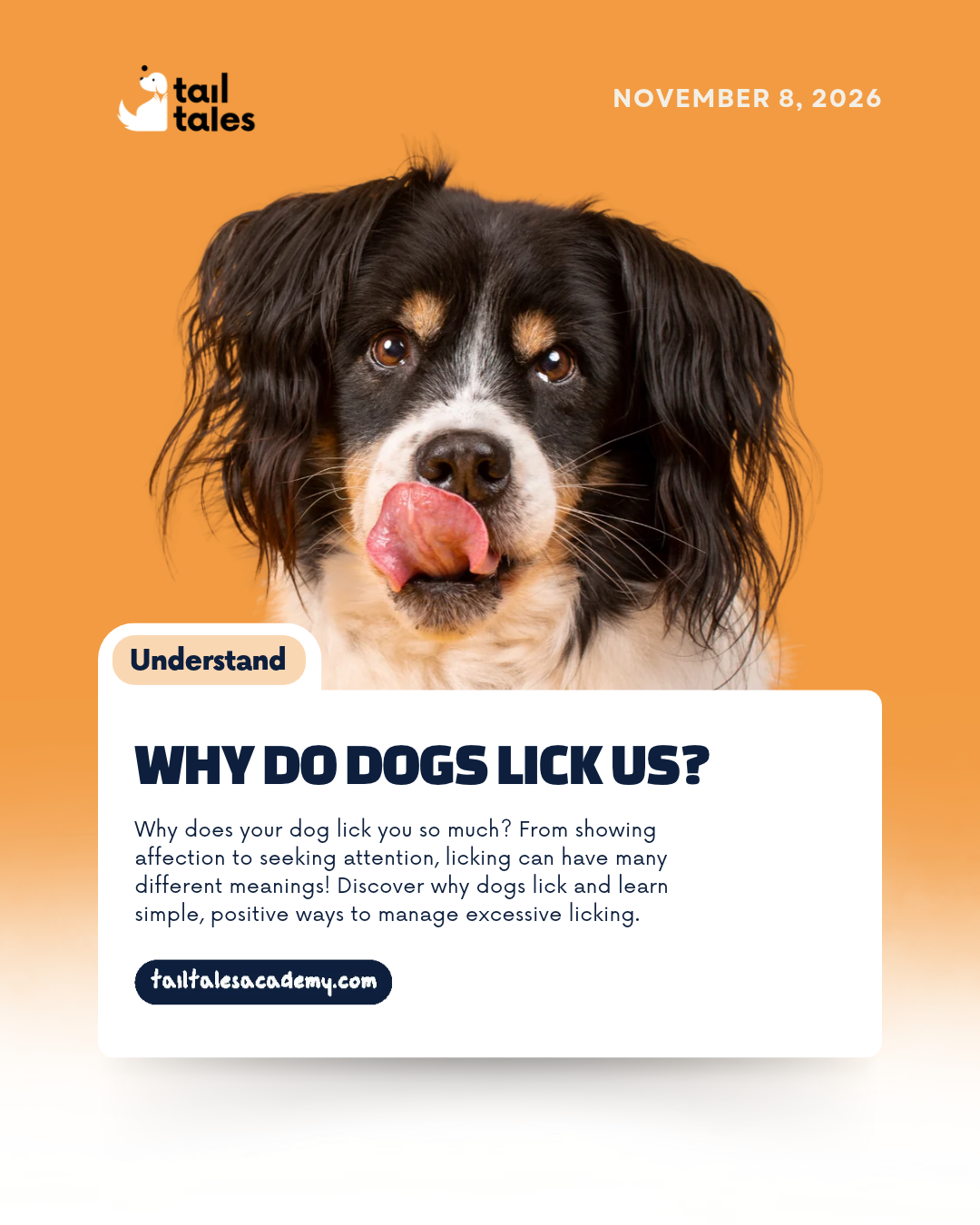
WHY DO DOGS LICK US? 🐶
Have you ever found yourself wondering: “WHY DOES MY DOG LICK ME SO MUCH?”
Sometimes, this behavior can become quite uncomfortable for us. Dogs naturally have very wet tongues, and for some people, their licks can even be ticklish! It can be especially uncomfortable when they go straight for your face, right? 😅
So, today, we're going to take a closer look at this behavior and explore how we can help our furry friends lick less often, especially when their constant kisses start to become a little overwhelming. Let's help you understand what's behind this habit!
Sometimes, excessive licking can even be a sign that something isn't quite right. That's why it's important to pay attention and identify the reasons why your four-legged friend might be licking you.
Keep reading! We'll explore each of these reasons in more detail and learn how to manage this behavior.
WHERE DOES LICKING COME FROM?
Mother dogs naturally lick their puppies when they're very young, and from an early age, puppies begin to associate this behavior with comfort and care. These licks also help keep them clean after birth. Mothers lick their puppies to stimulate blood circulation and help them eliminate waste. Even today, this is a completely natural part of early puppy development. So, if you notice your puppies doing this, there's no need to worry!
As they grow, puppies may also lick their mother's mouth. This behavior can encourage her to regurgitate food for them. Although this is not common among domestic dogs today, it was frequently practiced by their ancestors, wolves, and played an important role in feeding young pups during the weaning process.
As dogs get older, they naturally begin using their tongues to groom themselves and other dogs. This behavior is often an indication of a good relationship between them. Another situation where we may notice licking is during greetings, as some dogs use it as a way to say hello to other dogs.
WHY DOES MY DOG LICK ME SO MUCH?
For dogs, licking is a natural behavior and a form of communication. However, there can be several different reasons why your furry friend might be licking you. These include:
1. SHOWING AFFECTION ❤️
Dogs often choose to show their affection through licking. It's a gesture that can represent love, care, and the emotional bond they share with their owners.
They lick their owners to show affection and strengthen their bond.
2. COMMUNICATION 🐶
Licking can also be a way for dogs to express themselves and communicate. Through this behavior, dogs may express appeasement, respect, or even closeness when interacting with other dogs.
It's a way of expressing appeasement, respect, or social connection.
3. SEEKING ATTENTION 👀
Dogs may learn that licking is a way to get attention or even a reward. It's important to understand that whenever we give them attention after they lick us, we may be reinforcing the behavior, making them more likely to keep doing it.
If we want to reduce this behavior, one of the best approaches is to simply ignore it. There's no need to say "no" or get upset. Just calmly withdraw your attention when the licking starts, even if it's VERY hard to resist those puppy kisses! And trust us, we understand!!
If dogs learn that licking gets them pets or attention, they may repeat the behavior.
4. EXPLORATION 🔎
Just like us, dogs use their mouths and tongues to explore the world around them. Since they don't have hands, they rely on these senses to discover different tastes, smells, and textures. That's why it's important to keep an eye on what they put in their mouths and make sure they don't lick or swallow anything they shouldn't!
They use their tongues to explore different tastes, smells, and textures.
5. TASTE 😋
It might sound a little strange, but sometimes our furry friends simply lick us because they enjoy the salty taste of our skin. And no, they're not trying to eat us! They may just enjoy the salty taste of our sweat.
They may simply enjoy the salty taste of our skin.
6. ANXIETY OR STRESS
As you may have noticed if you have a dog, sometimes they may start licking their own paws. This behavior can be an indication that your dog is experiencing stress or anxiety. However, it may also be related to other issues, such as allergies, skin irritation, or even pain.
One way to check if this is happening is to look underneath your dog's paws and see whether the fur is matted or looks different from usual. This could indicate that they've been licking their paws, even when we're not around. Groomers (professionals who provide grooming and hygiene care for dogs) can also often identify some signs of this behavior!
It's important to pay attention, and if you notice that your dog is licking their paws frequently or persistently, it's best to consult a veterinarian to find out what's causing the behavior.
Licking can help dogs calm themselves down.
7. GROOMING AND HYGIENE
As mentioned earlier, it's quite common for dogs to lick their own private areas as a way of grooming and keeping themselves clean. However, when they lick another dog's private areas, this behavior may be related to curiosity and gathering information through their sense of smell and taste, as these areas contain scents that provide information about other animals.
They lick themselves to clean their fur and certain parts of their bodies.
HOW CAN WE PREVENT EXCESSIVE LICKING?
First of all, it's important to remember that excessive licking, compulsive behaviors, or any type of licking that causes pain due to allergies, irritation, or other health issues should always be taken seriously. In these cases, it's essential to take your dog to the veterinarian to identify the cause of the problem and make sure they receive the appropriate treatment.
On the other hand, if you want to reduce your dog's licking and teach them from an early age to use other ways of showing affection, there are a few techniques you can try:
1. IGNORE THE LICKING
One of the best techniques for preventing this and other unwanted behaviors from your furry companion is to ignore them when they happen. After all, one of the biggest rewards for dogs is getting our attention, especially when that's exactly what they're looking for. Whenever we give them attention after they display a certain behavior, we may be reinforcing it and increasing the chances of them repeating it to get even more attention.
Therefore, one way to prevent this from happening is to stop giving your dog attention as soon as the licking begins. This way, we're avoiding reinforcing the behavior and teaching them that when they start licking, the interaction ends and we move away.
Avoid giving your dog attention, petting them, or talking to them while they're licking.
2. REDIRECT THEIR ATTENTION
To redirect all that energy, you can use toys to distract your dog and start playing with them. This way, their focus shifts to playtime, helping them stop licking you and channel their energy into a more appropriate activity.
Offer a toy or start a play session.
3. REWARD GOOD BEHAVIOR
The behaviors we like should be rewarded within approximately 3 seconds, so your dog can associate the reward with the behavior they have just displayed. So, if you reward them when they start to calm down, stop licking, or lie down, you're showing them that these behaviors are desirable and increasing the chances of them repeating them in the future.
Reward your dog when they're calm and not licking.
4. TEACH ALTERNATIVE CUES
To redirect that energy and the licking behavior, you can also teach your dog different tricks, such as sitting or giving you their paw. Whenever your dog performs one of these actions, reward them immediately with a treat, affection, or attention. This way, they'll learn that these behaviors bring them rewards, making them more likely to repeat them instead of relying on licking to get your attention!
Teach alternatives such as sitting or giving you their paw.
5. KEEP YOUR DOG MENTALLY AND PHYSICALLY STIMULATED
Making sure your dog has regular walks, playtime, and activities that stimulate their mind can help reduce excessive licking. When dogs have enough opportunities to burn off energy and meet their needs, they're less likely to constantly seek our attention through this behavior.
Try scent games, interactive toys, and nosework activities to keep your furry friend busy and mentally stimulated! 🐾
Provide walks, playtime, and activities that stimulate their mind.
TO WRAP THINGS UP!
Finally, keep in mind that these methods need to be practiced consistently over several days, as results won't happen overnight. Especially if licking has already become a well-established habit for your dog, it will take plenty of positive reinforcement, patience, and repetition before these techniques start to make a difference.
Another important thing to remember is not to stop training as soon as you begin to see results. Keep practicing and applying these techniques until the new behavior is well established.
Remember: Consistency is Key! 🐾